

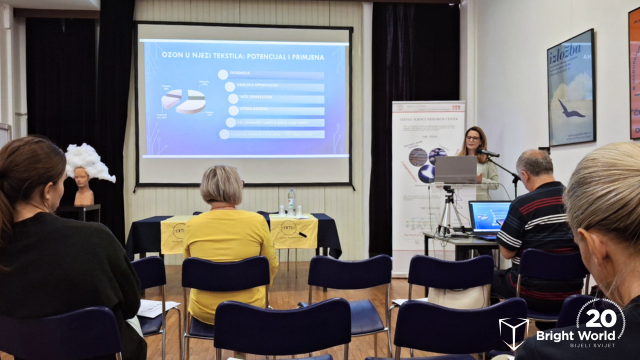
From practical questions to research and application
Can washing temperatures be lowered while maintaining the required standards of hygiene? How can the effects of ozone be assessed? And what does it really cost to wash a kilogram of laundry?
At Bright World, we connect these questions with the development of professional solutions. Our approach combines equipment expertise, an understanding of processes, research into potential improvements, and data analysis.
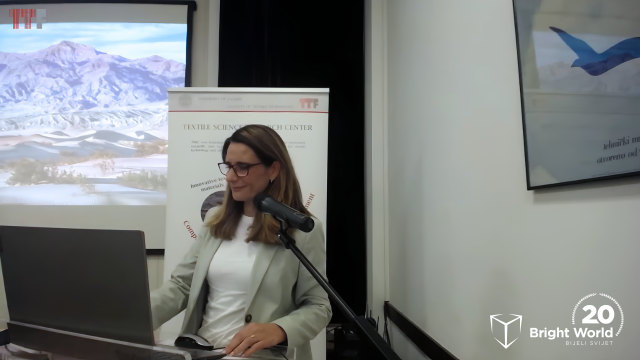
This approach was the focus of two recent expert talks by Katia Grgić, PhD. At the Textile Science Research Centre’s Open Day, she discussed process parameters and research into the use of ozone. At the HoReCa Adria trade fair, the focus was on digitalisation, costs, and laundry management.
Two different professional settings, with a shared starting point: progress begins with clearly defined questions and the evaluation of results.
TSRC 2026: “The Interplay of Process Parameters in Textile Care”
At the Textile Science Research Centre’s Open Day, held on 29 September 2026 and organised by the University of Zagreb Faculty of Textile Technology and TSRC, our Head of Research, Development and Education, Katia Grgić, presented a research-based approach to optimising textile care.
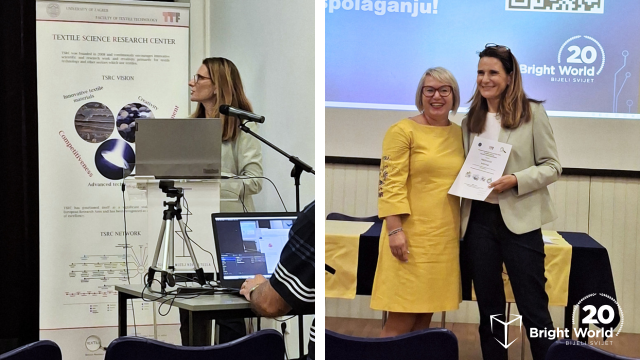
The talk took place at the Nikola Tesla Technical Museum as part of the “Interdisciplinary & Innovative Textile Ecosystems” programme.
The research question: can ozone support washing at lower temperatures?
The starting point for the talk was Sinner’s Circle, a model describing the interaction between chemical action, mechanical action, time, and temperature. Changing one factor affects the balance of the process, so optimisation requires an understanding of how these factors work together.
Lowering the temperature can reduce energy consumption, but it can also affect the washing process’s effectiveness against microorganisms. The research presented explored the potential use of ozone at lower temperatures, focusing on textile sanitisation and the removal of standardised stains under different detergent-use conditions.
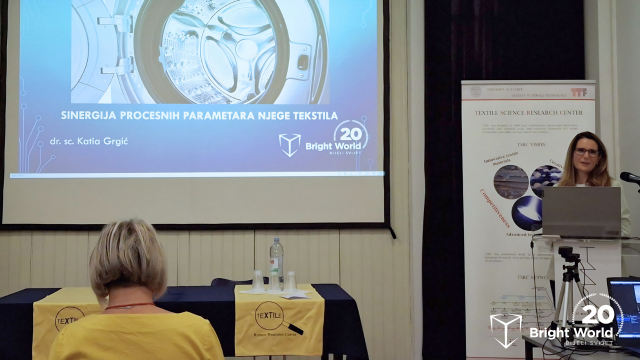
Using results to guide further development
Comparing different conditions helped build a clearer understanding of ozone’s effects and guide further research. The next step identified was to optimise how enzymes and ozone are used, including their concentrations, to improve washing performance.
An important part of this approach is distinguishing a technology’s potential from its demonstrated performance under specific conditions. Research does not end when results are presented: it raises more precise questions and lays the groundwork for the next phase of testing.
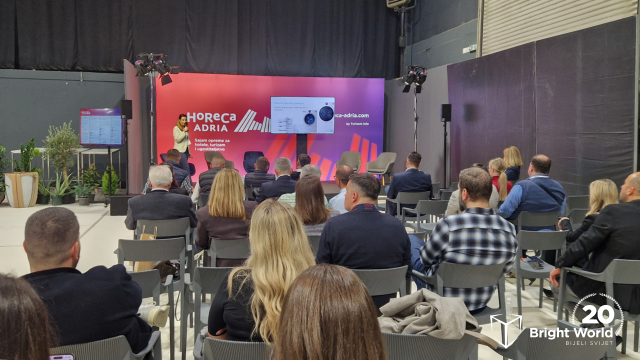
HoReCa Adria 2026: “From Washing Machine to Smart System”
At the HoReCa Adria trade fair, Katia Grgić presented a second, complementary perspective on the development of professional laundries: data-driven management.
Her talk, “From Washing Machine to Smart System”, explored the true cost of washing a kilogram of laundry and showed why throughput alone is not enough to assess efficiency.
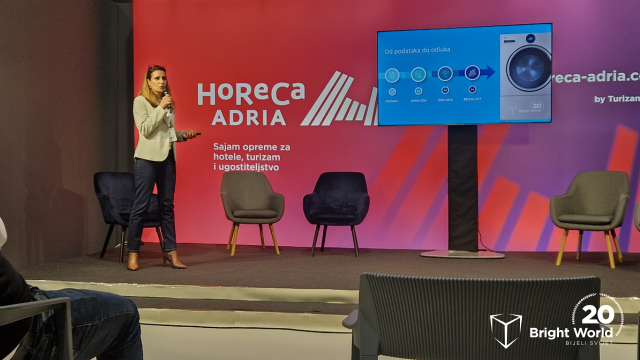
The analytical question: what goes into the cost of washing?
Water, energy, and detergent consumption are only part of the picture. Understanding costs also requires consideration of labour time, productivity, and process organisation, while accounting for differences in equipment and levels of automation.
A kilogram of washed laundry therefore provides a common basis for tracking costs and performance. What matters is not just how much laundry has been processed, but how many resources were needed to achieve the result.
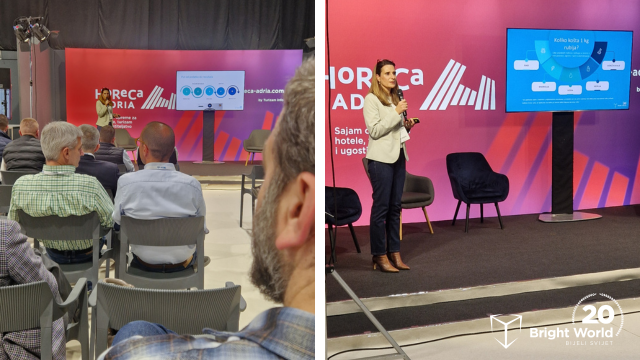
Digitalisation that supports decision-making
The talk covered automatic process adjustments, consumption tracking, remote monitoring, and predictive maintenance. The emphasis was on how these capabilities can help identify deviations and improve the organisation of day-to-day operations.
Staff training was another key point. Data only becomes valuable when people understand it, relate it to the process, and use it to make appropriate changes.
Two examples, one methodological approach
The TSRC talk illustrated how we investigate the relationship between washing conditions and the results achieved. The HoReCa Adria talk showed how we connect data with management and business practice.
What unites them is measurability: defining the problem, identifying the relevant parameters, analysing the results, and using those findings to plan the next steps.
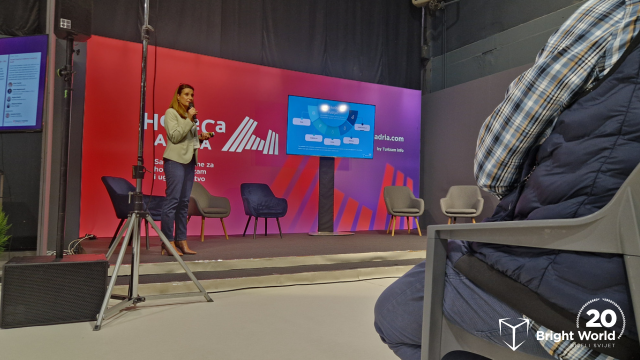
For Bright World, research and digital management are interconnected aspects of development. Understanding the process helps determine what to monitor, while data reveals where further testing or improvement is needed.
Knowledge as the foundation for future projects
Through expert talks, we connect research topics with industry needs and create opportunities for knowledge exchange between the academic and business communities.
We aim to build future research and development partnerships on this approach, with clearly defined objectives, documented methods, and indicators for assessing progress.
Our focus is on bringing together hygiene assurance, more efficient resource use, and the preservation of textiles’ functional properties. Because development is not simply about introducing new technology: it is about understanding its effects and turning knowledge into solutions that work in real operating conditions.